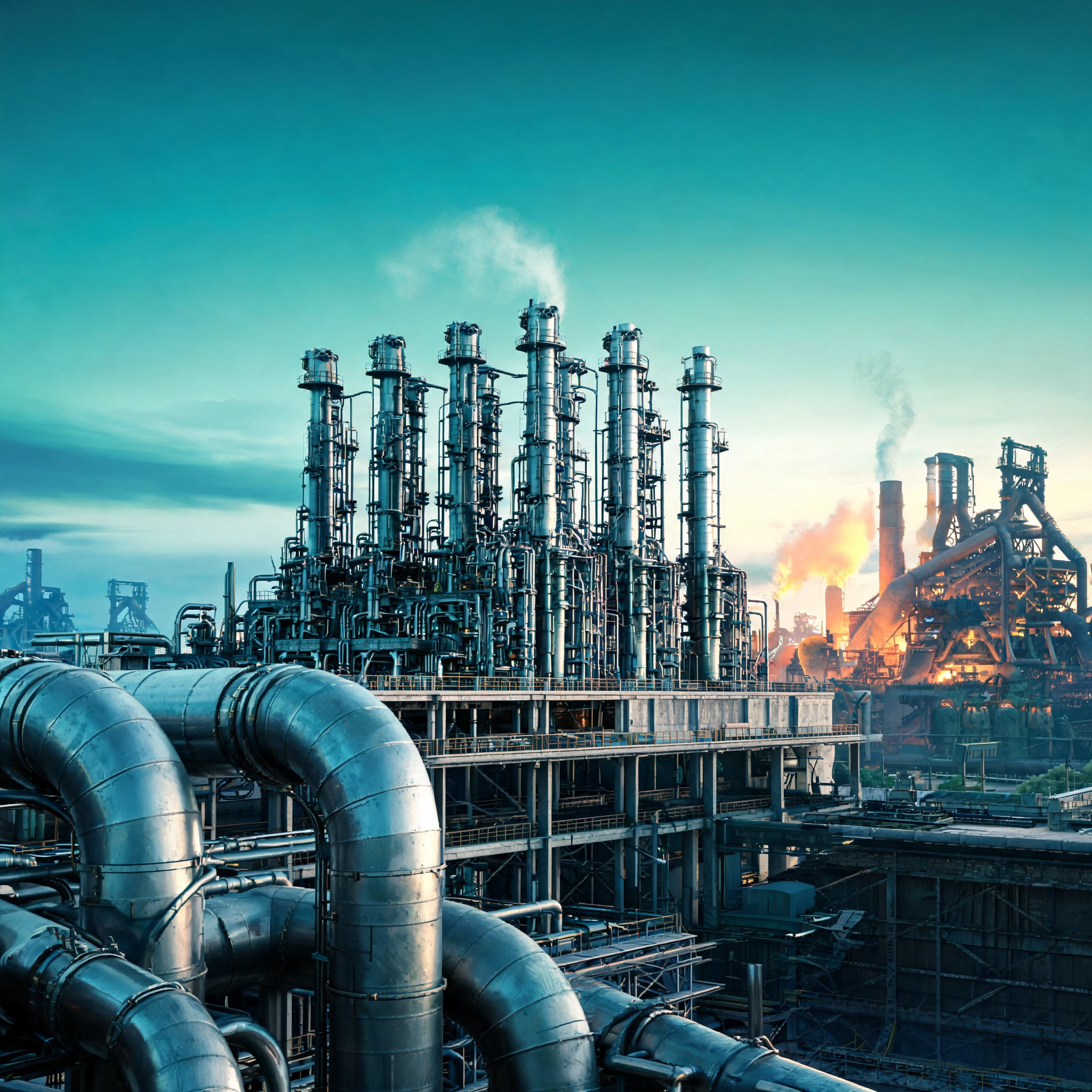
A pilot carbon capture trial at ArcelorMittal's integrated steelmaking site in Gent, Belgium, has captured more than 90% of the carbon dioxide in blast furnace gas, concluding its first phase, according to the partners. The trial applies Mitsubishi Heavy Industries' Advanced KM CDR Process and involves ArcelorMittal, MHI, BHP Group and Mitsubishi Development.
Test campaign and results
Phase 1 involved more than 4,500 hours of operational testing and focused on capturing CO2 from a proportion of the blast furnace off-gas. The partners said the campaign generated the operational and engineering data needed to assess a potential full-scale application at the Gent blast furnace.
Assessments based on the trial results indicate that applying the technology at full scale to the pre-combustion blast furnace off-gas could cut the site's CO2 intensity by up to 24%, the companies said. Extending the approach across multiple emission points in the plant could, they added, support progress toward near-zero emissions intensity.
Operating in a demanding gas stream
Blast furnace off-gas is an unburnt process gas carrying dust, sulfur-containing compounds and other contaminants, making it a demanding environment for capture equipment. The partners said the trial demonstrated the technical feasibility of applying MHI's technology in the steel sector at facilities such as Gent.
The off-gas contains significant concentrations of both CO2 and carbon monoxide. In this phase only the CO2 was captured; the remaining carbon, in the form of CO, can be used for power and heat generation elsewhere on site, with CO2 released when it is combusted.
Second phase to widen scope
Phase 2 aims to broaden carbon capture across multiple emission points in the steelmaking process. It will test the technology on gases from the hot strip mill reheating furnace, which is fired with gas and heats thick steel slabs to the temperature required for rolling into thin sheets. That furnace uses a blend of by-product gases from steelmaking — coke oven gas, blast furnace off-gas and basic oxygen furnace gas — together with natural gas, providing another capture point within integrated operations.
The second phase will assess MHI's technology under a different and more dynamic flue-gas profile, the partners said, and the results are expected to inform updated engineering and deployment studies for future full-scale applications.
Partner roles and comments
ArcelorMittal is facilitating the trial in Gent, while MHI is supplying its proprietary Advanced KM CDR Process and leading carbon capture process engineering and technical evaluation. BHP and MDP, as key suppliers of high-quality steelmaking raw materials to ArcelorMittal's European operations, are funding the work.
Frederik Van De Velde, CEO of ArcelorMittal Belgium, said the partners set out to understand how carbon capture could be incorporated into existing steel plants and welcomed the outcome of the first stage, describing the scaling up of the needed technologies as the vital next step. Tatsuto Nagayasu, senior vice president and head of CCUS at MHI, called the more than 4,500 hours of operation and capture rates above 90% an important milestone, noting the technology's ability to run under challenging blast furnace gas conditions including dust, sulfur compounds and other impurities.
Dr. Ben Ellis, vice president of marketing sustainability at BHP, said the results were promising and demonstrated the abatement potential of the blast furnace and integrated steelmaking route. He noted that around 70% of global steel production currently comes from blast furnace steelmaking, and that reducing emissions from that process is critical while alternate pathways are developed. Tadashi Mizuno, managing director and CEO of MDP, said the positive phase 1 results strengthened confidence that carbon capture applied to blast furnace gas could offer a viable pathway for reducing steel-sector emissions, alongside energy efficiency improvements and the use of high-quality raw materials.