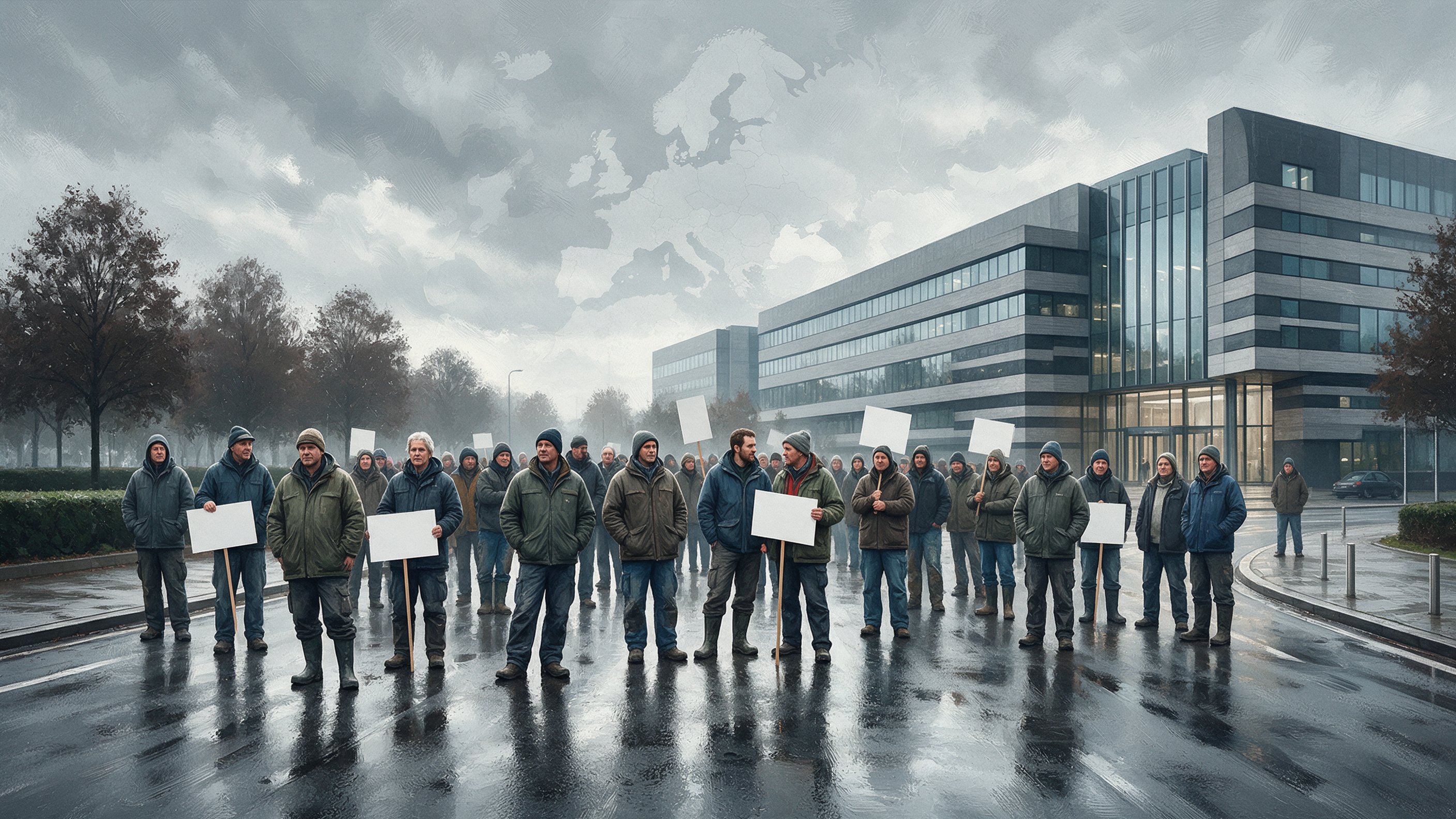
Around 700 farmers took to the streets of Brussels on Thursday, November 26, as political leaders, including the Taoiseach, gathered for talks on the European Union’s 2028–2034 long-term budget.
A special European Council meeting was held that day and was due to continue the following day, with the next EU long-term budget on the agenda. The discussions took place as political leaders remained divided on the way forward and were locked in negotiations.
Speaking in Brussels, the Taoiseach said protecting the Common Agricultural Policy (CAP) was a key concern for Ireland, for its agriculture and agri-food sectors. He said Ireland was pushing for additionality and for the CAP to be protected in the continuing negotiations.
Outside the meeting, farmers from across Europe delivered a clear message: keep the CAP common and give it the funding it needs. Their symbolic march was jointly organised by the Fédération Wallonne de l'Agriculture and Copa and Cogeca. It ended opposite the European Council building where the budget meetings were taking place.
Farm leaders warned that a proposed cut of more than 20% to the CAP remained on the table. They said such a reduction could slash agriculture’s share of the EU budget to a historic low, potentially triggering the end of some farms and widespread job losses across Europe.
The warning from farm leaders framed the budget debate around the survival of farms, food production and jobs, not only around the size of the CAP budget line. They said the decisions now being taken would carry consequences for consumers as well as producers.
Campaign and demands
This week, the Fédération Wallonne de l'Agriculture and Copa and Cogeca launched a campaign called “CAP Grows Our Defence”. The campaign highlights agriculture as a pillar of Europe’s collective defence.
Copa and Cogeca outlined three key demands to secure the future of European farming: protect CAP funding from the proposed cuts; reduce red tape and provide farmers with greater legal certainty; and ensure farmers receive a fair return for their produce.
The group also called for fairer competition in EU trade policy and compensation for additional fertiliser costs linked to the Carbon Border Adjustment Mechanism (CBAM).
The protest came amid mounting concern across Europe’s farming community that agriculture is approaching a critical crossroads. Decisions made now, farm leaders warned, will have far-reaching consequences for farmers, food production and consumers alike.
The scale of any final CAP settlement, and whether it would include the proposed reduction, was not settled in the information available. The talks were set to continue, with the CAP’s place in the long-term budget still a central point of contention.