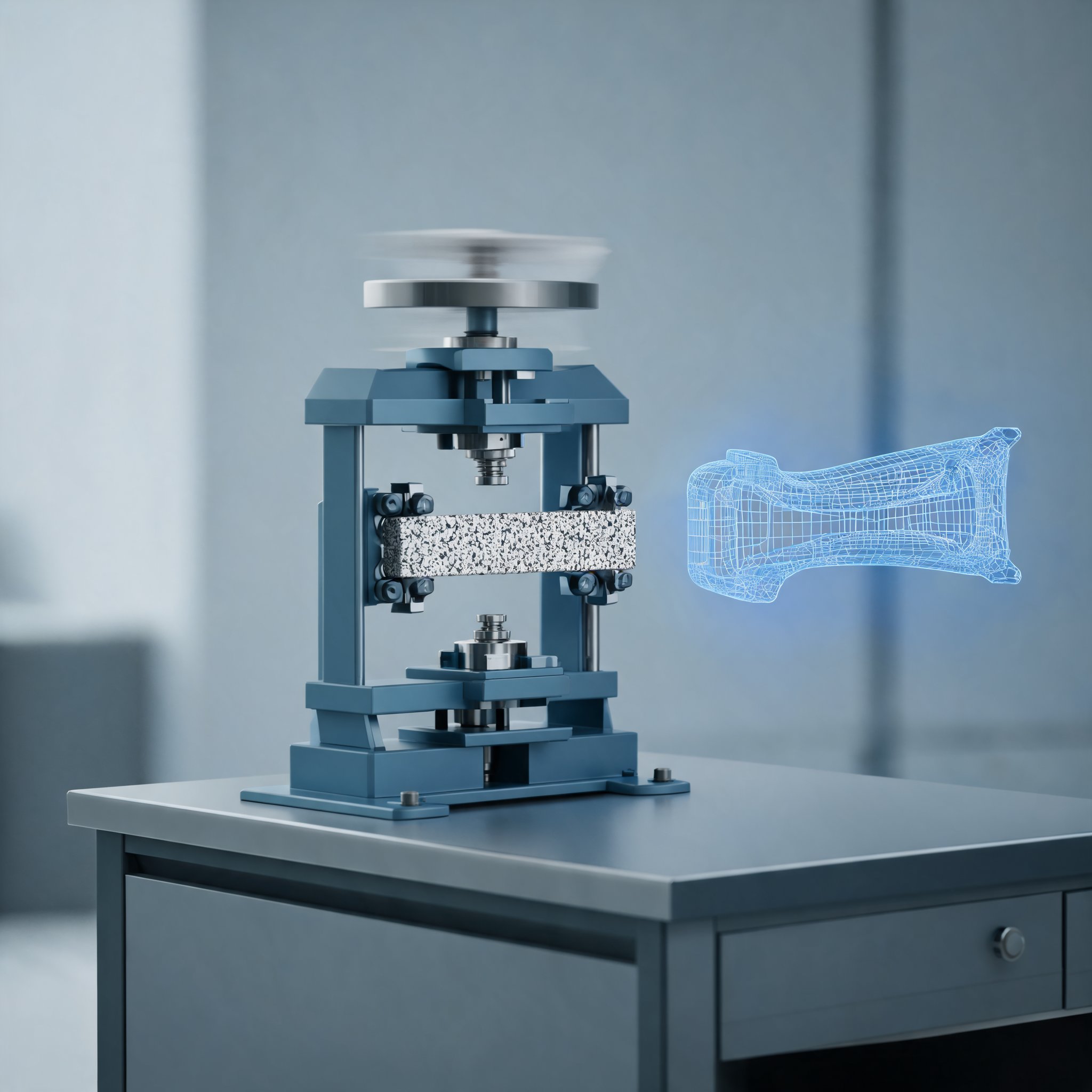
Simulation allows engineers to predict how a material or component will behave under different loading conditions and to assess a design before committing to a physical prototype, but the value of those predictions depends on how accurately the model represents the material. Andrea Incardona, application engineer and product specialist at high strain rate testing machine manufacturer Instron, sets out how characterisation at rapid loading rates can supply data for simulation, material selection and product development.
Why loading speed changes the answer
Many materials are strain-rate dependent: their mechanical response changes as loading speed increases. A material characterised under quasi-static conditions may therefore behave differently when it meets a rapid impact or a crash event, which means a model built only on conventional data can misrepresent the conditions a part actually experiences. Strength, stiffness, deformation mechanisms and failure behaviour can all shift as strain rate rises.
What a 2025 crash study showed
The point is not purely theoretical, Incardona notes. A 2025 study in the SAE International Journal of Materials and Manufacturing, "Influence of Strain Rate Effect on Mechanical and Crashworthiness Properties of CFRP Composite Structures", incorporated strain-rate-dependent material properties into crash simulations and found that discrepancies against experimental results narrowed. Peak acceleration discrepancy fell by 6.5 per cent, while mean acceleration and displacement discrepancies fell by 5.9 per cent and 6.3 per cent respectively. On that evidence, the relevance of material data matters as much as its quantity.
Test range and data capture
Depending on the material, specimen geometry and test method, high strain rate characterisation can extend from quasi-static conditions to strain rates approaching 1,000/s, giving engineers a broader picture of how properties change as loading becomes faster. Individual tests may last only 3 to 10 milliseconds, so the acquisition system has to resolve the material response within a very short window. Comparing one material at several loading rates illustrates the risk of relying on conventional data alone.
Material selection under weight constraints
Strength and stiffness remain important, but they do not necessarily indicate how a material will respond when loading becomes rapid. Two materials that look comparable in conventional testing can diverge under high strain rate conditions. Characterising their dynamic behaviour lets engineers weigh how each deforms, absorbs energy and ultimately fails under conditions relevant to the application, a distinction that matters most when performance has to be balanced against weight. In automotive crash structures or aerospace components, that information can inform both material choice and component design.
Earlier use in development
In Incardona's description, dynamic characterisation fits into a development sequence in which material behaviour is measured, incorporated into simulation, used to compare design options and then validated through physical testing. Rather than acting as a final check on an existing design, the data can be applied earlier to judge whether a material is suitable, refine a component and see how changes may affect performance.
Instron states that its high strain rate testing systems support data acquisition at up to 200 kHz, and that digital image correlation (DIC) can add information on how strain develops across the specimen, with analysis tools supporting data processing and theoretical modelling. These are the manufacturer's stated capabilities rather than independently verified results.
The argument returns to relevance: material data is only as useful as its fit to the conditions a component will face, and testing at rapid loading rates is presented as a way to give engineers a fuller picture of performance from simulation through to product development.