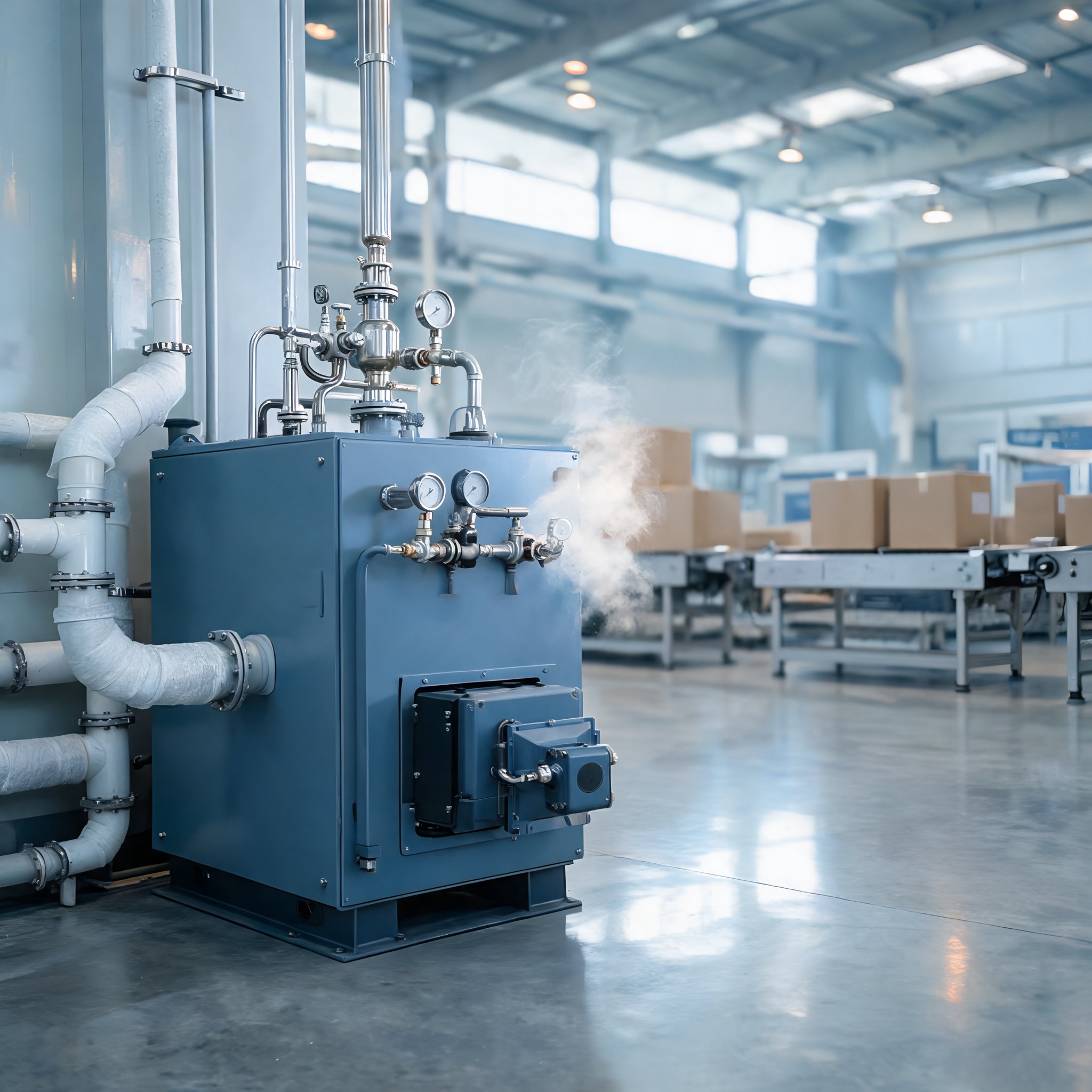
Miura America displayed its LX-50 steam boiler at PACK EXPO International 2026, held October 18–21 in Chicago, at Booth LU-8035. The company used the packaging and processing trade show to present the compact unit as a way for facilities to respond to changing steam demand while supporting production continuity and energy efficiency.
The LX-50 is a 50 BHP boiler designed to produce about 1,730 pounds of steam per hour for processing, cleaning, sanitation and other plant-support applications. It is offered in standard-pressure models from 70 to 150 PSI and low-pressure models operating at 15 PSI.
Designed for variable demand
- Steam output: approximately 1,730 pounds per hour at 50 BHP.
- Pressure options: 70–150 PSI standard models or 15 PSI low-pressure models.
- Design: once-through, low-water-content watertube; rapid startup and on-demand steam production; helps reduce standby losses, according to Miura.
- Fuels and performance: natural gas or propane; 85% efficiency and NOx emissions as low as 20 PPM, as stated by the company.
Miura says the design can help packaging and processing facilities conserve floor space, support reliable daily operations and advance energy-efficiency and emissions-reduction goals. The company also provides boiler-room support including site assessments, system design, installation support, water treatment, remote monitoring, maintenance and ongoing optimization. At the show, Miura highlighted how these systems and lifecycle services can help facilities address changing production needs and sanitation demands.