Blackpool's Pleasure Beach has traded for 130 years on wooden roller coasters, the Big One and a busy show schedule. Its retail operation draws less attention, but Damian Jackson, the resort's head of retail, describes it as a designed business rather than an exit-shop formality: every range, he says, must have a reason to exist, a defined customer and a connection to the park.
Jackson's remit covers stores, e-commerce, ride photography and product development, and he works with Amanda Thompson from the first concept through design briefs, sampling and final approval. His account of how ranges are assembled shows where the commercial argument is strongest, and where it rests on a single operator's description.
Several audiences in the same afternoon
Visitors change by the hour. In one day the park may serve first-time families, school groups with limited spending money, teenage friends and couples, international tourists, lifelong fans and dedicated coaster enthusiasts. Motives differ accordingly: a family wants a souvenir that fixes the memory of the day, an enthusiast wants an accurate collectable tied to one ride, teenagers are drawn to confectionery, accessories and trend-led clothing, while a heritage-minded audience responds to nostalgia and the stories behind the resort.
Jackson's method mixes sales data with observation. Reports show what is moving; explaining why requires time in the shops, conversations with staff and guest feedback. Products are tested against a set of questions — would someone wear it away from the park, would an enthusiast display it, would a child be pleased to receive it, would it genuinely remind a family of the visit — which is meant to screen out items that carry a logo but no purpose.
A portfolio organised by price and intent
Ranges are grouped by customer mission and price band: impulse items such as confectionery, magnets, keyrings and badges; practical goods including bottles, bags and ponchos; fashion-led apparel and accessories; children's products and plush; and premium or limited-edition pieces for collectors. Attraction-specific lines sit alongside wider park branding, licensed ranges, playful products and heritage collections. Jackson is explicit that breadth is not volume: the aim is an edited range in which each item has a target customer and an appropriate price, not shops filled with unlimited choice.
The Aviktas test case
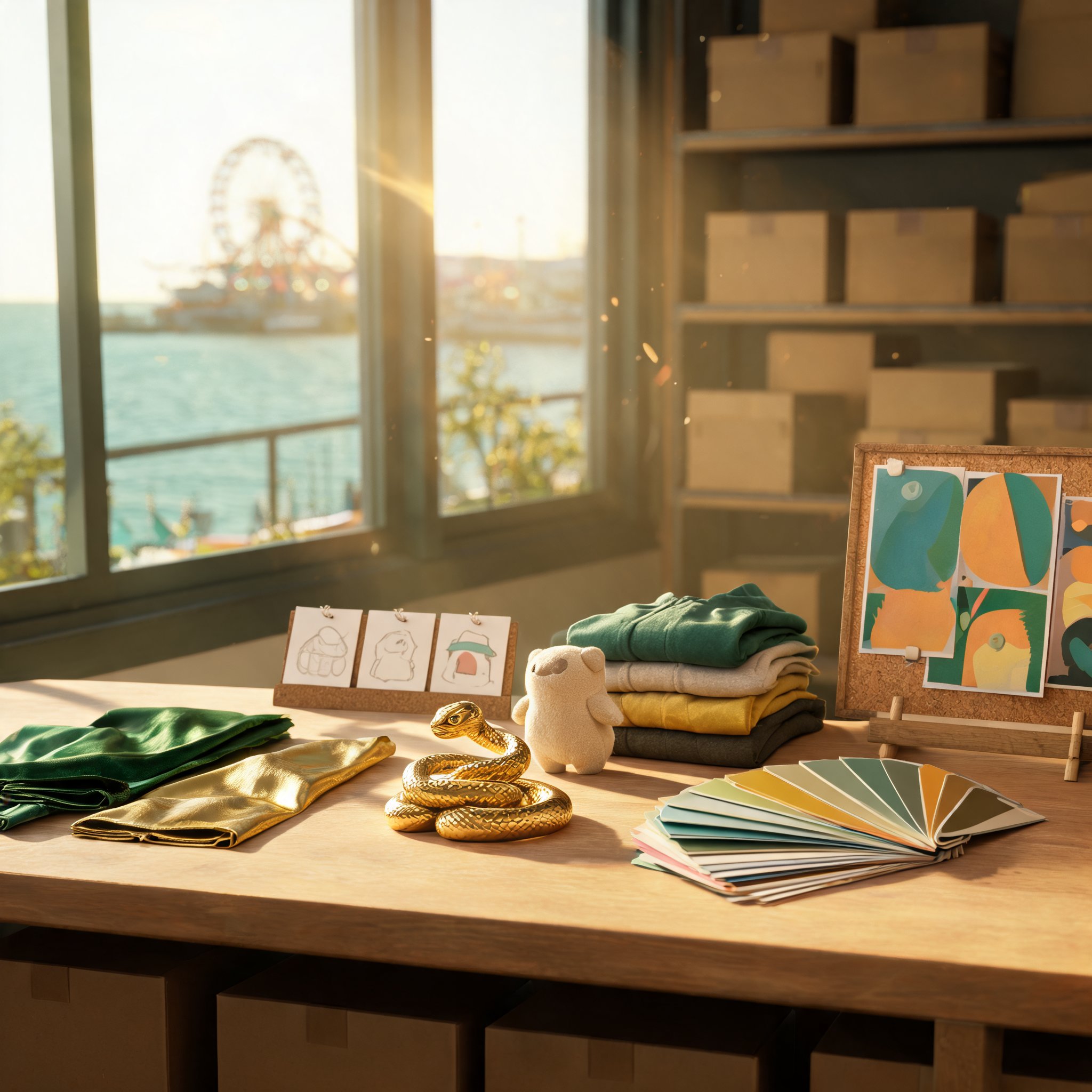
Aviktas, a new attraction, is his example of retail being built alongside an identity rather than after it. Instead of a set of products carrying a ride logo, the range was organised around the attraction's visual world — a golden snake, emerald colouring, mythology and a sense of mystery — with retail involved early enough to shape the creative conversation. The strongest evidence he offers is a limited run of 50 models at £250 each, which sold out. That shows a collector segment will pay for authenticity and detail; it does not measure how large that segment is, or whether it would repeat the purchase.
Heritage, playfulness and licensed brands
Nostalgia carries commercial weight because the resort has been part of family routines for generations. Jackson describes an archive of attraction imagery, typography, posters and architecture that can be reinterpreted in contemporary apparel, homeware and collectables; archive artwork and character-led ranges such as Mr Funshine are used to bring historical material forward without making it read as merely old-fashioned. Playful, colourful, lower-cost products extend the offer to children, families and casual visitors.
Licensed properties, including Nickelodeon and Aardman's Wallace and Gromit, require partnership between the park, the IP owner and approved suppliers, with brand guidelines and approval processes. Jackson's argument is that relevance and exclusivity are the defence against general online retail: designs that tie a licensed character to the park, the attraction or the visit, reinforced by personalisation, so the identical item cannot be bought elsewhere.
What guests now ask for
Demand, he says, has shifted toward products that feel exclusive, authentic and considered: attraction-specific merchandise, premium apparel, subtle branding, limited editions and items with a story. Wearability beyond the visit matters, so a hoodie, cap, bottle or bag has to work as a product in its own right. Enthusiasts want accurate detail, models and technical artwork that recognise an attraction's history or engineering. Heavily branded goods without a story have become less persuasive, though keyrings, magnets, mugs and confectionery remain important — with rising expectations of design, quality and presentation.
Operations, suppliers and conversion
Jackson names stock accuracy and availability as the least glamorous and most critical part of the operation: a good product earns nothing if it is in the stockroom, unpriced, unordered or absent from where guests expect to find it. Deliveries, replenishment, signage, pricing and daily compliance checks also protect the guest experience, since clear pricing builds trust and full shelves make buying easier.
Suppliers are treated as partners rather than manufacturers: they receive the story, ambition and intended customer behind a range and are expected to contribute ideas while meeting standards on quality, lead times, compliance and consistency.
The conversion argument begins with products guests actually want and continues through presentation, location, storytelling, pricing and staff confidence. Clear price architecture lets a guest enter a range at different levels, and trade-up is justified by visible extra value — materials, detail, exclusivity, personalisation or a bundle — rather than a higher figure alone. Adjacencies do part of the work: a plush may lead to an outfit, a ride photograph to a frame or multi-photo offer, apparel to matching accessories.
Retail as a stage of the visit
Jackson wants shopping to read as part of the day rather than its final errand, which means considering retail while attractions and guest journeys are planned. Themed environments, demonstrations, characterful displays, confectionery experiences, personalisation, ride photography and interactive selling — including the activities run at the Big Big Bubble Shop — are intended to make shopping entertaining, and each shop is meant to reflect the attraction it serves. Staff are expected to act as hosts and storytellers rather than transaction handlers, and their feedback can reach management before it appears in sales reports. Gift wrapping and personalised embroidery add value and make a purchase harder to replicate online, while e-commerce extends the relationship past the visit and tests demand among enthusiasts and former visitors who cannot travel to Blackpool.
What the account establishes
The reasoning is specific and internally consistent, and the Aviktas sell-out is a genuine data point. It is also a narrow one: 50 units at £250 show that a collector market exists, not its size or its repeat behaviour, and Jackson cites no visitor numbers, conversion rates or revenue figures, so the claim that retail forms part of the experience rests on operational description rather than measured outcome. The transferable principle is the timing — involving retail while an attraction is still being conceived, rather than adding merchandise after opening — which other operators can test against their own ranges.