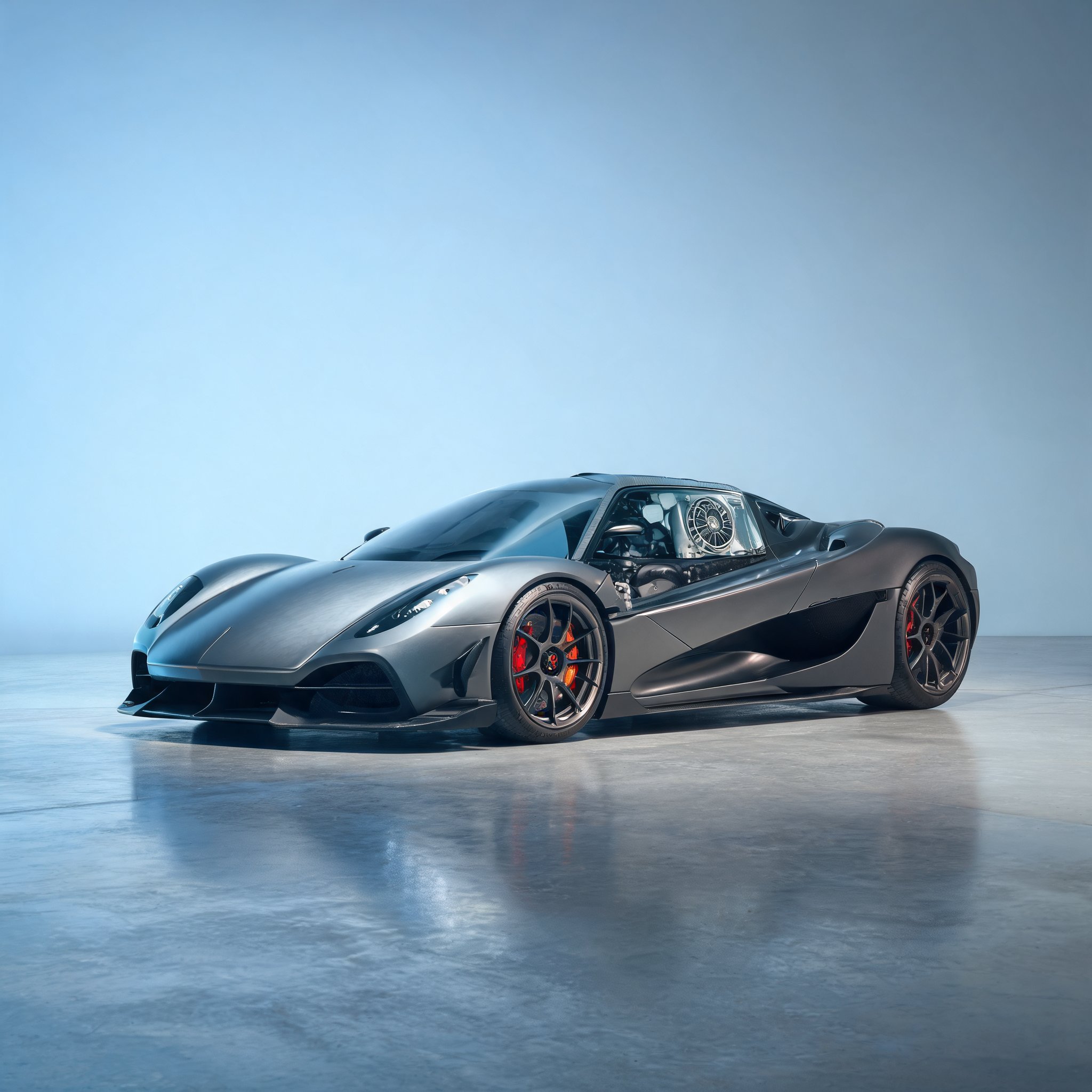
Porsche has unveiled the Mission S, a new mid-engine supercar that the company says will occupy a permanent place in its lineup rather than serving as a one-off or limited-run hypercar. The car was revealed on Thursday, and its production version is intended to sit above the 911 in the range.
The Mission S places its engine behind the driver but ahead of the rear axle — a configuration Porsche notes is the least common in its history, alongside its rear- and front-engined models. The company described the debut car as a "permanently available super sports car offer," confirming that buyers will eventually be able to purchase some version of it.
Design cues from racing and road heritage
The flattened front end draws loosely on the GT1 Le Mans racer, while the rear half carries hints of the 959, according to the company's presentation. One of the more distinctive styling elements is a swirling radiator fan mounted above the engine, echoing the 917.
Powertrain remains undisclosed
Porsche has not disclosed what powertrain will power the Mission S. The car will certainly use internal combustion, but the company deliberately avoided specifying which engine sits under the hatch. Speculation has pointed toward a newly developed flat-eight, following a September report from German outlet Handelsblatt that such an engine was in development at Porsche. Other elements of that report appear to align with what is known about the Mission S, including its position at the top of the lineup and a possible half-million-dollar price tag — a figure that remains unconfirmed.
Interior prioritizes analog, driver-focused engagement
At the debut, Porsche emphasized analog engagement. Although a central knob resembles a manual or sequential shifter, "PRND" markings suggest an automatic transmission, and metal paddle shifters behind the steering wheel further point to a PDK setup. That does not rule out the possibility of a future stick-shift variant, though the company has not confirmed one.
The cabin is clearly driver-focused. Everything is canted toward the driver's seat, and depending on drive mode the tachometer extends closer to the driver for a clearer view. As is typical for Porsche, five circular gauges sit on the dash and the key is inserted on the left.
Notably, the design omits a large center screen. Porsche said it deliberately chose "not to include a permanently integrated center display or a fixed passenger display in the dashboard." Instead, the car uses a retractable smartphone system compatible with MagSafe, allowing the driver's phone to serve as a navigation or information display. The My Porsche App provides access to all functions and lets users select digitally rendered, historically inspired designs for the circular instruments. Even the comfort and driving control knobs below the phone mount pull out and push back in.
Porsche previously showed a concept of a similar kind — the Mission X — billed in 2023 as a potential successor to the 918 Spyder. Details of the production version of the Mission S, including its final powertrain and pricing, have yet to be confirmed.