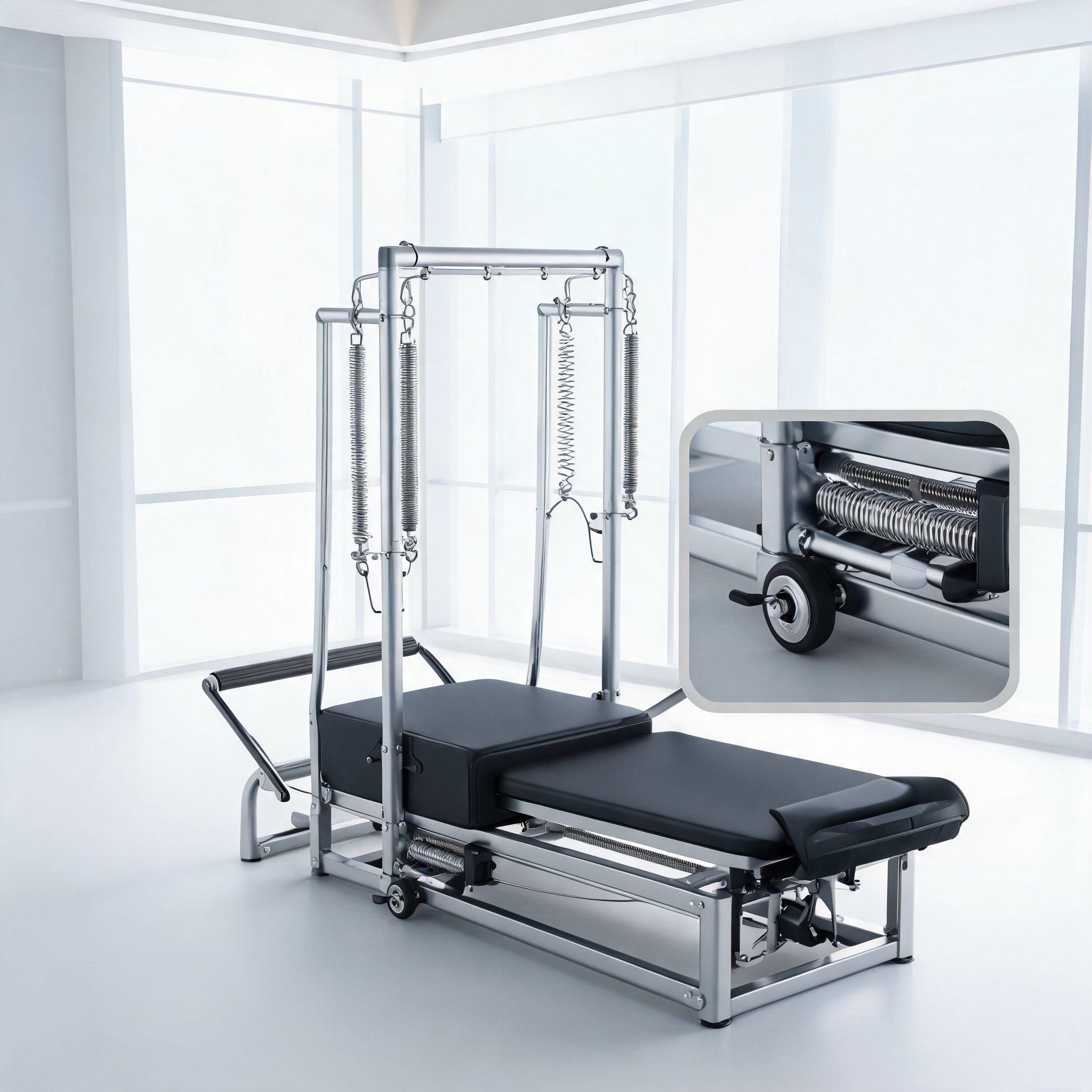
RINTELN, the Shenzhen-based fitness equipment maker also known as Shenzhen Ruiteng Sports Technology Co., LTD, is promoting a line of basic aluminium Pilates reformers for commercial studios, gyms and rehabilitation academies. The company’s pitch comes as demand for commercial mind-body equipment expands across Europe, North America and Asia-Pacific, and as buyers place more emphasis on structural engineering than on appearance alone.
The company, established in 2021, says its basic aluminium series uses high-grade anodised aluminium profiles and is available in silver and black finishes. It is presenting the models as CE-certified, a status the company links to European import requirements and commercial insurance needs for dynamic-load safety. The line is aimed at high-traffic group studio environments where equipment must withstand repeated use.
Procurement shifts beyond price
According to RINTELN, commercial buyers are moving away from price-led purchasing after encountering problems with low-cost machines. It lists noisy carriage tracking, frame deflection under body loads, premature spring fatigue and rapid roller deformation as common failure points. Those issues can interrupt classes, affect user safety and raise maintenance costs, the company says.
Its suggested sourcing checklist covers four areas: verifiable international safety compliance, carriage mechanics, spring alloy quality and supply-chain flexibility. RINTELN argues that CE certification should be checked rather than assumed; that carriage assemblies should use precise bearings and durable wheels; that spring metallurgy should resist fatigue; and that order minimums, colour choices and lead times should fit studio expansion plans.
Component and carriage engineering
RINTELN says it integrates German-imported springs and original German sealed bearings into its core structural assembly. The springs are intended to provide consistent tension and resist metal fatigue over tens of thousands of cycles, while the sealed bearings are meant to reduce rotational friction and support smooth movement.
The company also says an internal 11-person research team spent 180 days testing material formulations for a silent wheel assembly. The design combines a high-density, high-tensile polyurethane outer layer with concentric wheel construction. RINTELN says this reduces carriage vibration, floor drag and track noise under maximum load.
Low MOQ and customisation
For international buyers, RINTELN offers a one-piece minimum order quantity. The company says this allows distributors and studio owners to order an evaluation sample, inspect carriage mechanics and check finishes before committing to bulk orders. It also offers 60 leather colours for upholstery and complimentary brand customisation, including laser logos on aluminium frames and embroidery on wristbands and ankle straps.
Standard production takes seven to 20 days, depending on customisation and volume, according to the company. RINTELN says this turnaround is intended to help studio operators meet opening deadlines without sacrificing build quality or finish consistency.
Warranty and after-sales
RINTELN backs the commercial line with a five-year structural warranty, which it presents as evidence of confidence in its engineering and materials. To limit downtime, the factory ships high-wear replacement parts with initial machine orders and provides instructional video tutorials for local facility managers handling component replacement.
The company’s message is that total cost of ownership should include warranty coverage and technical support, not just the purchase price. For commercial buyers, the proposition rests on verifiable compliance, durable carriage components and flexible order terms. RINTELN’s claims about performance and certification still need to be checked against documentation and sample testing before bulk procurement.