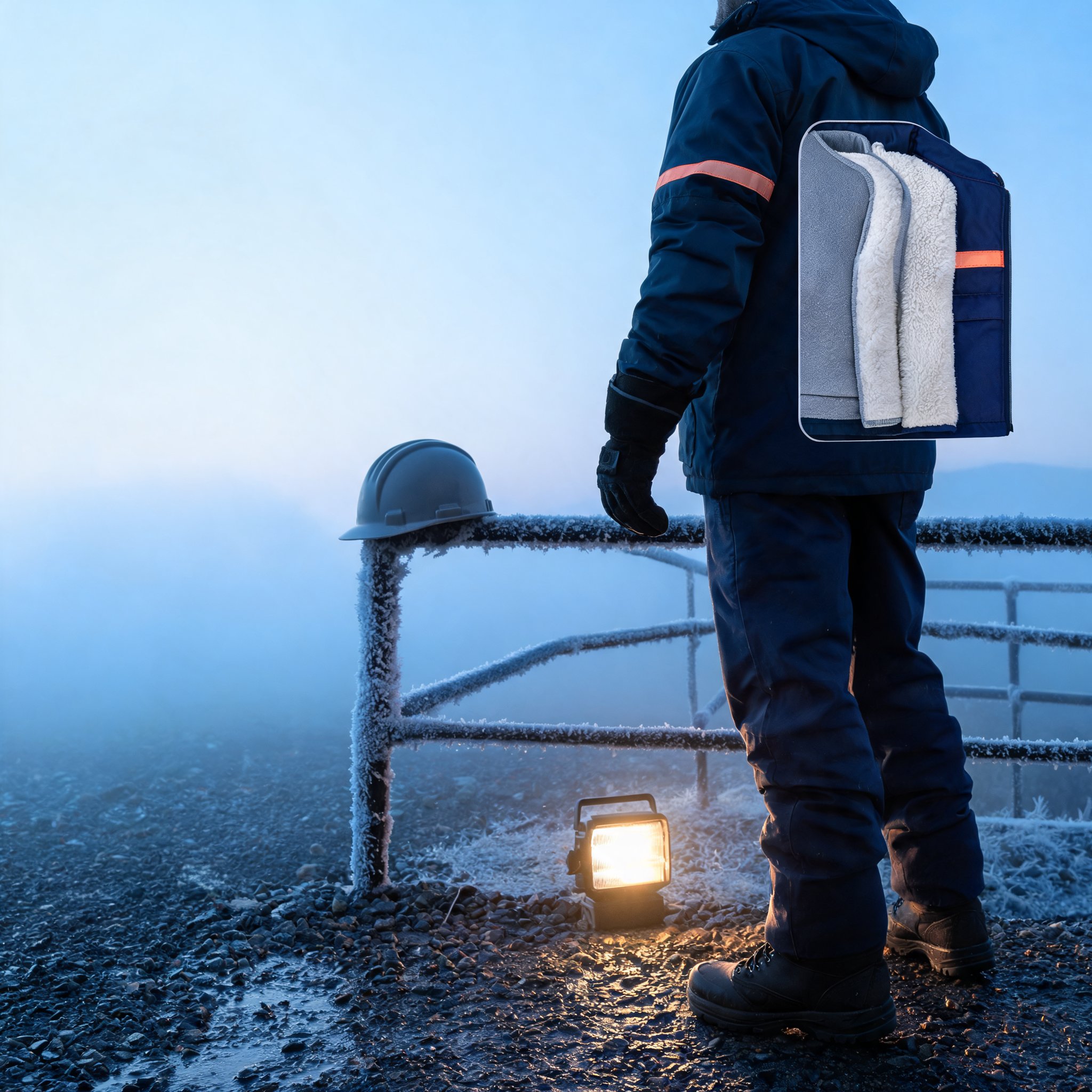
Winter work outdoors changes the hazard picture. Shorter daylight hours, wet conditions and frost can alter risks at outdoor workplaces, yet personal protective equipment is not always adjusted to match. CWS Workwear International GmbH, based in Dreieich, highlights this problem in a current guide on winter PPE and names five typical protection gaps.
The company’s central point concerns how clothing layers work together. Individual garments may be certified, but the combination actually worn may still fail to meet the requirements of the relevant standards. A jacket, mid-layer, trousers, gloves or footwear that performs as specified on its own does not automatically form a compliant system when worn together.
CWS Workwear therefore frames winter protection as a question of selection and combination, not simply of adding warmer clothing. The guide names five typical gaps; its central warning concerns situations where outdoor work continues through cold, wet and low-light conditions and where PPE choices may remain unchanged as conditions shift.
For workers, the stated risk is specific: protection can appear complete at the level of individual items while falling short in the worn combination. Checking compatibility across layers is therefore part of winter PPE planning, according to the company’s guide. That distinction matters when conditions change and the same clothing combination is carried over from one task to another.